
If You’re Sitting on the Fence About Selling, Here’s What You May Want to Think About
Over the past few years, I have had a lot of conversations with homeowners who are thinking about making a move, but are not quite ready to take the next step.
Some are downsizing. Some are thinking about upsizing. Some are considering cashing out and moving to another part of British Columbia, another province, or even another country. Others are simply tired of maintaining a home that no longer fits their life the way it once did.
But there is one thing I hear quite often.
“I could have sold for more a few years ago.”
And in many cases, that may be true.
The market we saw a few years ago was not normal. Low interest rates, very strong buyer demand, limited inventory, and a lot of urgency created a market where prices moved quickly. Sellers often had more leverage, buyers had fewer options, and decisions were being made at a much faster pace.
Today, the market feels different.
Buyers are more cautious. Financing matters more. Presentation matters more. Pricing matters more. Homes may take longer to sell. There may be more competition. And for many sellers, that can feel frustrating.
But here is the part that often gets missed.
The price you sell for is only one part of the equation.
What you do next may matter just as much, and in some cases, even more.
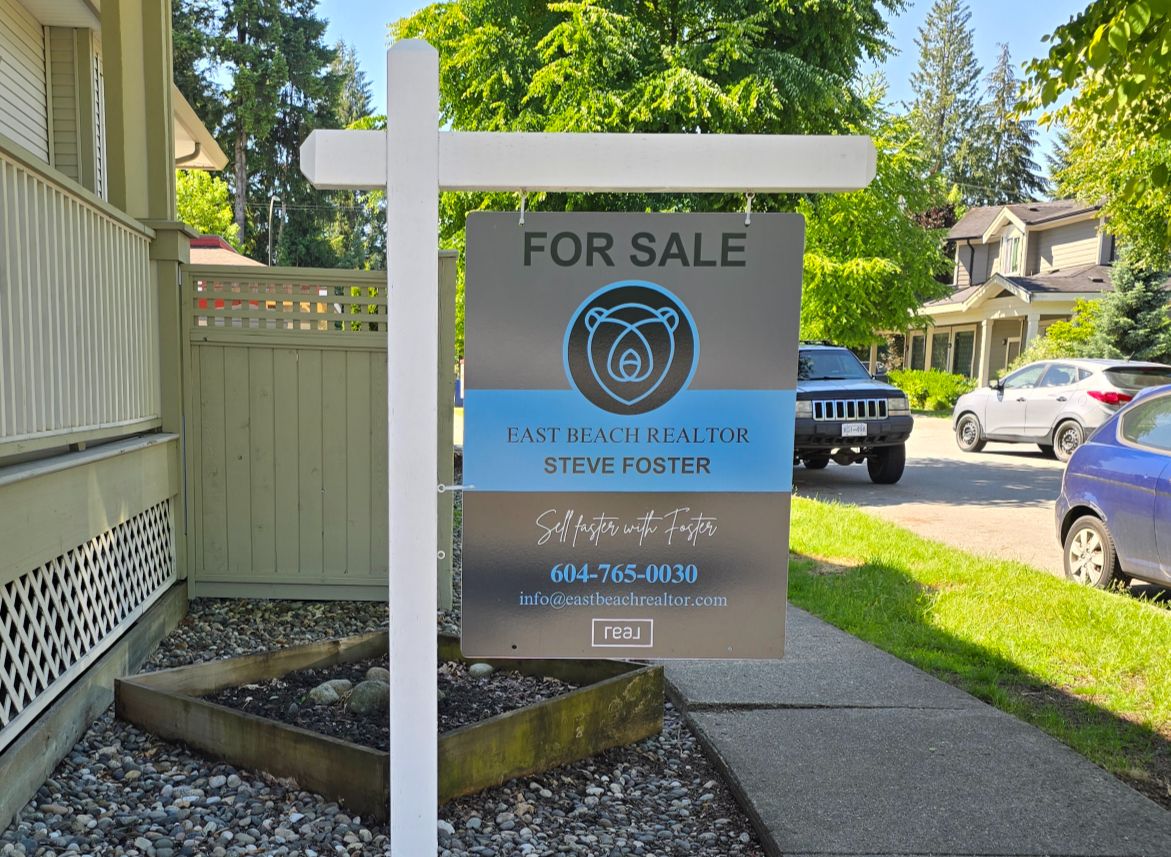
The Market You Sell In Is Often the Market You Buy In
If you are selling your home and buying another one, it is important to remember that you are usually operating in the same market on both sides.
If prices are softer when you sell, they may also be softer when you buy.
That does not mean every property type or every neighbourhood moves the same way. A detached home in White Rock, a townhome in South Surrey, a condo in the Fraser Valley, and a retirement property outside the Lower Mainland can all behave differently. But generally speaking, if the market has cooled, it may create opportunities on the buying side as well.
This is where people can get stuck.
They focus only on the number they wish they had sold for in the past, without looking closely at what they may be able to buy today.
For example, if someone is downsizing from a larger detached home into a condo or townhome, a softer market may mean they sell for less than they hoped, but they may also buy their next property for less than it would have cost during a hotter market.
That difference matters.
It is not just about the sale price. It is about the net result.
Downsizing Is Not Just a Financial Decision
For many people in White Rock and South Surrey, downsizing is not simply about money. It is about lifestyle.
Maybe the house has become too much to maintain. Maybe the yard no longer brings the same enjoyment it once did. Maybe stairs are becoming a concern. Maybe travel, family, health, or simplicity are becoming bigger priorities.
In a softer market, some downsizers hesitate because they feel they “missed the top.”
I understand that feeling.
But the more useful question may be, what is the cost of waiting?
That cost is not always financial. Sometimes it is another year of maintaining a home that no longer suits you. Another winter worrying about repairs. Another season feeling like your home is controlling your lifestyle instead of supporting it.
A recent Globe and Mail article discussed how a weaker housing market can affect downsizing decisions, which is exactly why this conversation needs to be approached thoughtfully, not emotionally [1].
A good downsizing plan should look at the likely sale price, the cost of the next home, strata fees if applicable, moving costs, taxes, monthly cash flow, investment options, and lifestyle goals.
That full picture is much more useful than simply saying, “I should have sold five years ago.”
Upsizing Can Also Make Sense in a Softer Market
The same idea applies to people who want to upsize.
Let’s say you own a townhouse or condo and you want to move into a detached home. In a hot market, the gap between your current home and your next home can widen very quickly. Detached homes may rise faster in price, and buyers often feel pressure to act quickly.
In a softer market, that gap may become more manageable.
You may not sell your current home for the peak price you imagined, but the larger home you want may also be more negotiable. There may be more inventory. You may have more time to complete due diligence. You may be able to include subjects. You may be able to think clearly instead of rushing into a major decision.
That can be valuable.
A buyer’s market often means more property options, more room to negotiate, and less pressure compared with a seller’s market, where homes can move quickly and prices may be higher [2].
For move-up buyers, the most important number is not always the sale price of the current home. It may be the price gap between the home you own and the home you want.
That is where proper forecasting can help.
Cashing Out Requires a Different Kind of Planning
Some sellers are not buying locally again.
They may be planning to move to Vancouver Island, the Interior, Alberta, another province, the United States, Mexico, Europe, or somewhere else entirely.
In that case, the conversation changes.
Now it becomes less about buying and selling in the same market, and more about what the sale proceeds will do for the next stage of life.
Will the sale allow you to buy mortgage-free somewhere else?
Will it create retirement income?
Will it reduce monthly expenses?
Will it help adult children?
Will it allow more travel, flexibility, or peace of mind?
Again, the sale price matters. Of course it does.
But it is not the only thing that matters.
If selling today gives you enough to do what you want next, waiting for a past market to return may or may not be the right decision.
No one has a crystal ball. Prices may improve. They may soften further. Interest rates may shift. Buyer confidence may change. Inventory may rise or fall. But your personal circumstances are just as important as the market.
A good move should be based on both.
Buying and Selling at the Same Time Needs a Strategy
One of the biggest reasons people stay on the fence is that they do not know how to line everything up.
Should they sell first?
Should they buy first?
What happens if they sell and cannot find the right place?
What happens if they buy and their home does not sell quickly?
These are fair questions.
Buying and selling at the same time requires planning, timing, and a clear understanding of your risk tolerance. Real estate professionals often recommend preparing early, understanding your finances, and making sure you are in the strongest position possible before listing or writing an offer [3].
This is where a proper move forecast can be incredibly helpful.
Before making any major decision, you should have a sense of:
- What your home may realistically sell for in today’s market
- What costs may come out of the sale
- What your next purchase may cost
- Whether you would be buying first or selling first
- How much cash you may have left over
- How your monthly payments or expenses may change
- What risks need to be managed
- What timeline would feel comfortable
This does not mean you need to list your home tomorrow.
It simply means you should understand your options before the pressure is on.
The Past Price Is Not Always the Best Guide
It is natural to think about what your home may have been worth at the peak.
Most people do.
But the problem with focusing too much on a past number is that it can keep you from making a good decision today.
The better question is not, “What could I have sold for five years ago?”
The better question is, “What would a move look like for me now?”
Would it improve your lifestyle?
Would it reduce stress?
Would it put you in a better financial position?
Would it help your family?
Would it allow you to move closer to the life you actually want?
Those are the questions that matter.
Real estate is not only about timing the market. It is about making a decision that fits your life, your finances, and your next chapter.
A Softer Market Does Not Mean a Bad Market
A softer market can feel discouraging for sellers, especially if they are comparing today to the hottest years we have seen.
But softer markets can also create opportunities.
There may be less pressure. More room to negotiate. More time to make decisions. More realistic conversations between buyers and sellers. And for people who are both selling and buying, the overall move may still make a lot of sense.
Recent surveys have shown that many Canadians sell because their current home no longer fits, whether they need more space or less space [6]. That is the part I think homeowners should pay attention to.
The decision to move is usually not just about the market.
It is about life.
Before You Decide to Wait, Run the Numbers
If you are sitting on the fence, my suggestion is simple.
Do not guess.
Run the numbers.
You do not need to commit to anything. You do not need to put a sign on the lawn. You do not need to make a rushed decision.
But you should know what your options look like.
A proper conversation can help you understand what your home may sell for, what your next move may cost, what the market is doing in your specific neighbourhood, and whether moving now could make sense for your bigger picture.
Sometimes the answer may be to sell.
Sometimes the answer may be to wait.
Sometimes the answer may be to prepare now so you are ready when the right opportunity appears.
That is the value of speaking with someone who can help you look beyond just the sale price.
Because in the end, the most important question is not always, “What can I get for my home?”
It may be, “What can this move make possible?”
If you are thinking about downsizing, upsizing, cashing out, or simply exploring what a move could look like in White Rock, South Surrey, or the Fraser Valley, I am always happy to have that conversation.
No pressure. No rush. Just a clear look at the numbers and what may make the most sense for you.
Categories
- All Blogs (64)
- Avra (2)
- Bank Of Canada (2)
- Buyer tips (56)
- Buying a home in White Rock (40)
- community guide (44)
- Cresent Beach (4)
- Foster Martin (2)
- Grandview Heights (9)
- market update (5)
- Miramar Village (13)
- Morgan Creek (6)
- Ocean Crest Cottages (1)
- Real estate South Surrey (54)
- Realtor (57)
- Realtor search (59)
- Selling Your Home (19)
- Selling your home in White Rock (25)
- Soleil (2)
- South surrey (48)
- Southwynd (4)
- Sussex House (3)
- White Rock (39)
Recent Posts





GET MORE INFORMATION